Our impact
How we've supported carers this year
See how we've made an impact on carers' lives.
 //
//
Skip to a section:


How has Carers in Hertfordshire helped carers?
Some carers and former carers have kindly shared a little about themselves, their caring role and how Carers in Hertfordshire has helped them in our Impact Video.
Introduction
“In the 2025 – 2026 financial year, we have continued to see an increasing number of children and adult carers register with us – 4,456 in total. As we marked our 30th anniversary during the year, we took the opportunity to survey unpaid carers across Hertfordshire. The survey helped us better understand carers’ experiences, the challenges they face, and where there may be gaps in support. Thank you to everyone who took part. Your feedback is invaluable and helps us improve our services and plan for the future.
This insight will help shape our priorities as we continue to connect carers with each other and with services, influence decision-makers, and provide support.
Working with partners including Hertfordshire County Council and local NHS services, we help ensure carers are recognised, have choice and control in their caring role, and receive support for their own health and wellbeing.
We look ahead with ambition, looking for new opportunities to grow and develop our services. With your continued support, we can reach more carers, strengthen our impact, and continue to provide high-quality, inclusive, person-centred services.”
Michèle Stokes, Chief Executive
Our year in numbers


More followers on our social media pages:




How we help… Connect
We want carers to feel more connected to each other, to services and the communities in which they live. We organise opportunities to bring carers together that help reduce isolation and link them to the support available to them.
Hubs
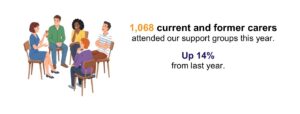
We run carers support groups in venues across Hertfordshire and online. We also support a Carers’ Camera Club. The groups bring carers together to make friends, provide practical and emotional support to each other, and find out about local services.


Mentoring
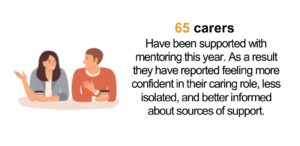
We match unpaid carers who need support with trained volunteers with experience of caring or relevant work skills. They will meet or call you regularly at agreed times to provide a listening ear, encouragement and support.


Carer Development and Learning

627 carers and bereaved carers attended a course or workshop. As a result:
- 97% of attendees said they had gained knowledge or skills.
- 77% of attendees felt better able to cope.
- 75% pursued an interest.
- 65% felt listened to and valued.


How we help… Influence
We help carers share their views and experiences to influence the design and delivery of local and national health, social care and community services that they or the people they look after use.
We also work with organisations and the community to help them better understand carers’ needs and lives and in identifying carers and connecting them with support.
Carers involved in training

Carers and former carers received training and ongoing support to help shape and inform carer-friendly services by sharing their experience of caring with health and social care professionals and students. They helped deliver 167 training and co-production sessions this year.

How we help… Support
We enable carers and bereaved carers who use our services to feel more confident and supported in exercising choice and control over their caring role.
Information and Advice
We supported carers with a range of issues such as respite and financial assistance. The top three topics were the support we provide, information about the Carer’s Assessment or a request for a referral for one, and what help adult social services provides.


Carers Passport
Used by carers to:
- Save money on days out or in shops and businesses.
- Prove their caring role to access help or benefits travelling, or taking some they care for to a health appointment or visiting them in a care setting.
3,850 Carers’ Passports were issued this year – up 2% from last year.
Admiral Nurses
Our team of dementia specialist Admiral Nurses supported 723 people caring for someone close to them with dementia this year.
They helped carers with:
• Planning for changes or building resilience.
• Advice on medication or coping with challenging behaviour due to the illness.
• Understanding dementia and more.
As a result of support 77% of carers reported improved wellbeing.
Make a Difference
Current and former carers have received something to benefit their health or wellbeing through our Make a Difference Service. Some people have received equipment to fulfil a hobby or sport, developed their skills by taking part in a course or had a much-needed holiday.

Bereavement Support
263 bereaved carers received bereavement support over the phone and at our two groups – helping them come to terms with their loss and transitioning on from their caring role.
Looking forward
In the 2025 – 2026 financial year – our 30th anniversary year, we will continue to work with partners and the wider community to ensure people who provide unpaid care or help to someone close to them are not alone in their caring journey. We will: